


What I Learned Reading Dozens of Autism Tattoo Stories (I Still Don't Have One)
- Milette

- Jul 20
- 4 min read

Type "autism tattoo" into Google and you already know what comes up.
Page after page of the same 30 designs.
Puzzle pieces. Rainbow infinity loops. Butterflies. Lists with titles like "50 Amazing Tattoos" that all blur into one long scroll of pretty pictures.
I don't have an autism tattoo. I'm not getting one, at least not right now.
But as a "special" mom, I couldn't stop clicking through gallery after gallery, story after story, trying to understand what this whole trend was actually about, not the designs themselves, but what's underneath them.
So that's what this post is. Not another list of ideas. Just what I actually noticed after spending way too many nights reading other families' ink stories.
The Two Symbols That Are Quietly Disagreeing With Each Other
Almost every gallery treats the puzzle piece and the rainbow infinity symbol the same way: two pretty options, pick whichever fits your wrist better.
But the more I read, the clearer it became that these two symbols are not saying the same thing at all.
The puzzle piece goes back decades, to autism organizations that chose it because autism was seen as puzzling, something hard to figure out.
A lot of adults with autism have since pushed back on that symbol, and honestly, once you hear their reasoning, it's hard to unhear it: it can suggest a person is missing a piece, rather than simply being whole and different.
The infinity symbol came later, out of the neurodiversity movement, and says something completely different: there's an infinite, valid range of ways a brain can work.
I'll admit, I'd seen both symbols a hundred times in "special" mom circles and never really sat with the difference. Now I can't un-notice it.

Whose Story Is the Tattoo Actually Telling?
Here's the pattern that hit me hardest: almost every tattoo I found belonged to a parent.
Moms with puzzle pieces. Dads with their child's handwriting inked on a forearm. Post after post framed around "autism mom" pride and "autism dad" love.
And look, I get it. That love is real, and I felt it in nearly every story I read.
But it also means the picture most of us have of an "autism tattoo" was built mostly by parents like me, not by people with autism describing themselves.
When I did find adults with autism talking about their own ink, the tone shifted: less "awareness," more identity.
A stim turned into a design. A special interest instead of a symbol. A rainbow infinity chosen on purpose because it wasn't a puzzle piece.
It made me stop and ask myself something I hadn't before: when I picture "the" autism tattoo, whose autism am I actually picturing?

It's Rarely Really About the Design
Once I stopped looking at the artwork and started reading the stories behind it, one thing showed up again and again.
The tattoo is almost never really about representing autism as an idea.
It's standing in for something much more specific.
A diagnosis day that changed everything. A hard season you weren't sure you'd get through. A kid who struggled and is still here, still growing. An adult finally putting language to an experience they didn't have words for until later in life.
Two people can have the exact same puzzle piece on their skin and be carrying completely different things underneath it.
The symbol barely tells you anything on its own. It's the story that gives it meaning, every time.
What Actually Surprised Me
Two things I wasn't expecting.
First, how many people are honest about not loving their old tattoo anymore. I came across more than one story of a parent who got a puzzle piece years ago and now feels differently, not regret exactly, but enough discomfort to add to it, cover part of it, or just talk openly about how their thinking has changed.
You don't see that kind of honesty in the glossy "30 best designs" posts, where every tattoo is presented like a finished, uncomplicated statement.
Second, how recent the rainbow-infinity-as-acceptance-symbol trend actually is, considering how established it already feels.
Read the posts in order by date and you can watch it happen — earlier ones almost entirely puzzle pieces, later ones increasingly explicit about choosing anything but.
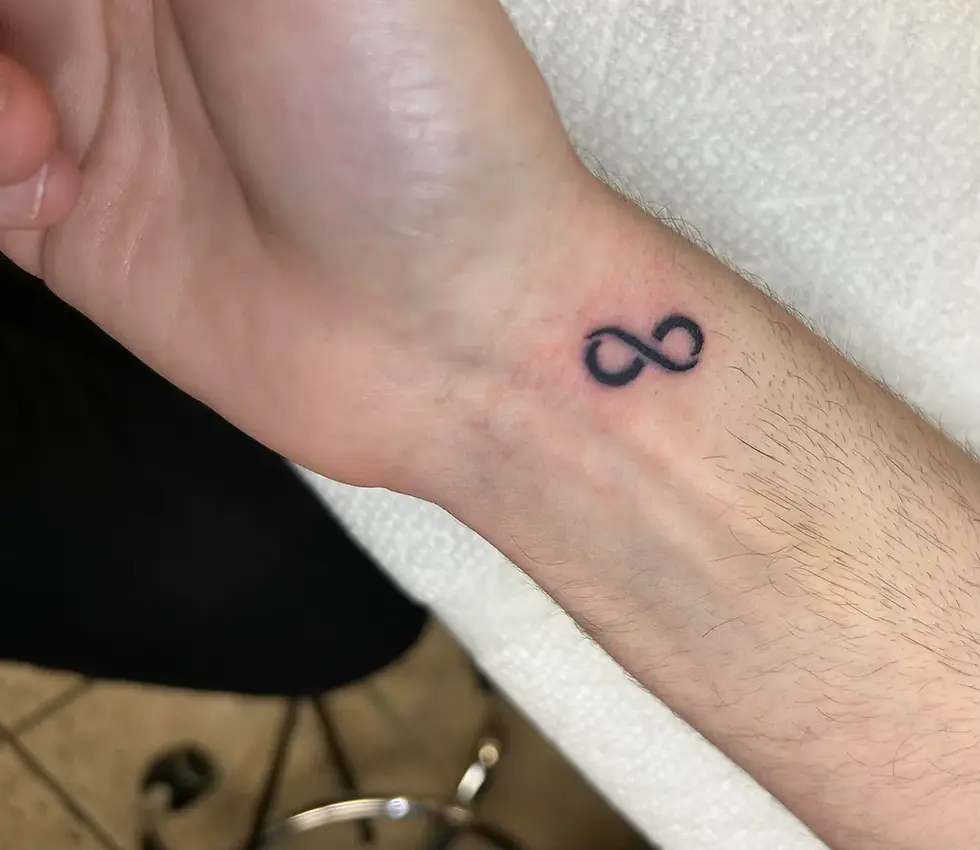
The Question I Couldn't Answer (and Didn't Expect I'd Need To)
Here's where I landed, and it's not a neat bow on top.
Is it even fair to ask one symbol to hold something as wide and individual as autism?
Puzzle piece, infinity, butterfly, lightbulb, semicolon: every version I found was someone's attempt to compress a huge, personal experience into one small image simple enough to fit on a wrist.
None of them fully manage it. I don't think any single symbol could.
That's not really a flaw unique to autism tattoos.
It's what happens any time a community gets asked to fit inside one icon.
Reading story after story made that tension feel personal rather than abstract because I've spent years trying to explain my own child's world to people who've never had to think about it.
If You're Actually Thinking About Getting an Autism Tattoo
I won't pretend to know what you should get.
That was never really the point of this post.
But if you've read this far because you're seriously considering your own autism tattoo, here's the one question worth sitting with, more than "which symbol looks best": what's the real story underneath it, the one only you could tell?
Based on everything I read, that's the part that ends up mattering. Not the design itself, but what you're carrying inside it.
The symbol is just the container. Your story is what gives it meaning.


rr 88 mình vừa mở lên để xem họ sắp xếp trang thế nào và thông tin đặt ở đâu cho dễ đọc, kiểu lướt nhanh vài phút là biết có gọn gàng không. Giao diện nhìn thân thiện, các khối nội dung canh khá ngay hàng nên mắt mình bắt được thông tin nhanh. Chuyển mục cũng mượt, bấm qua lại không thấy bị khựng. Mình để ý họ có nhắc tới kho game hơn 1.000 thể loại, nhưng mình không đào sâu, chỉ xem cách họ trình bày thôi. Có một phần nói về nguồn gốc pháp lý được công khai khá rõ ràng, đọc qua thấy yên tâm hơn so với mấy trang giấu thông tin. Nói…
Trước giờ mình cũng hay xem mấy dự đoán cho biết thêm thôi, chứ không kỳ vọng kiểu chắc chắn trúng. Có thời gian mình còn ghi chép lại vài lần để đối chiếu, thấy bữa đúng bữa sai, nên dần coi đó như một thú vui nhẹ nhàng, vừa giải trí vừa tập bình tĩnh. Bạn bè mình thỉnh thoảng nhắc dd xsmb như một cách lọc bớt thông tin loạn, nhưng mình nghĩ quan trọng nhất vẫn là tự kiểm soát và biết dừng đúng lúc. Mình thích những bài phân tích có giải thích rõ ràng, kiểu nói về chu kỳ hay tần suất để đọc xong hiểu được lý do người ta chọn số đó. Nói…